Long car rides with kids: what helps from minute 27 on
By Philipp, founder of fabelooPublished 30 August 20267 min read
Diesen Artikel auf Deutsch lesen
Departure 6.04 am, the back seat still asleep. Dad has his coffee in the holder, eleven hours to the sea ahead, and a plan: leave early, they'll sleep half the way. At kilometre 34 — before the first service station is even signposted — it comes from behind, clear and wide awake: "Are we there yet?"
Anyone laughing or despairing right now can lean on the research: the timing of that question has been measured with surprising precision. And the answer to what helps next is not the one the reflex reach for the tablet suggests.
Minute 27: boredom arrives on schedule
27 min
A British survey for the national roads authority measured the rest of the timetable: after an average of 2 hours 23 minutes comes the first serious "are we there yet?" — and at 2 hours 37, the first fight breaks out in the back. That leaves 14 minutes. It is the window in which parents can still turn the trip around before it tips.
Why children can't simply endure this the way adults do, time psychologist Ruth Ogden has calculated soberly: for a five-year-old, one year is a fifth of their entire life — the same distance simply IS relatively longer. Add to that the missing map in the head: no sense of progress, no control over route or stops. That uncertainty points attention at time itself, and watched time crawls. "Three more hours" is not information to a child. It is an eternity without an outline.
The default rescue makes kids sick in the car
Lena, nine, has a fix for eternity that works at home: the series on the tablet. Twenty minutes later she feels sick. That isn't bad luck, it's physiology — and at nine, Lena is at the exact peak age for it.
43.4%
The mechanism: the eyes report a still image to the brain — book page, screen — while the balance organ in the inner ear reports curves and acceleration. The brain cannot reconcile the two, and the child feels sick. Reading and playing on a screen make it worse. The American Academy of Pediatrics draws a remarkably clear conclusion: look outside rather than at books or games — and listen, sing, or talk instead. The ear is the only channel that keeps a child engaged while the eyes stay free for the horizon.
Which turns the family classic on its head: the very device that reliably buys peace at home is the worst choice in the car — and old-fashioned listening is the medically recommended one. What an audio story sets off in a child's mind is more than distraction anyway: a whole inner world of its own (what listening does differently than watching).
What actually helps in those 14 minutes
For the drive to the sea, this means: the schedule belongs to the breaks, the distance belongs to the ears. Swiss touring club TCS recommends at least 15 minutes of real movement every two hours — almost to the minute where the British data says the mood tips. In between, three things carry surprisingly far:
- Audio in stages rather than in one block: one story per leg of the route, with an announced landmark ("until the big bridge") — it gives the trip the outline children don't have in their heads.
- Window games for the eyes: I spy, counting number plates, colour bingo — they point the gaze outside, exactly where it belongs to fight the nausea.
- The repeat-favourite trick: the same story for the third time is not a step back but how children work (why children hear the same story a hundred times).
14 min
Past the Gotthard it goes quiet in the back. Not the exhausted quiet after a fight — the concentrated kind, where all you hear is the guardrails sliding by and, now and then, a soft giggle at a line from the speaker. Lena watches the mountains out of the window, and in the story a girl is riding through a tunnel that opens towards the sea. "Are we there yet?" is asked only by Dad that day — nobody turned the traffic jam near Bellinzona into a story for him.
Frequently asked questions
- How often should you take breaks on a long drive with kids?
- Swiss touring club TCS recommends at least 15 minutes of real movement every two hours — matching the British finding that the mood tips after roughly two and a half hours.
- What helps against car sickness in children?
- Looking out at a distant point, a middle seat, light food — and entertainment for the ears instead of the eyes: reading and screens sharpen the sensory conflict, listening doesn't (ADAC, AAP).
- From what age are audio stories worth it in the car?
- From around three, short and clearly told stories work; age-by-age details are in our piece on the right starting age (/blog/audio-stories-right-age).
Sources
You might also like
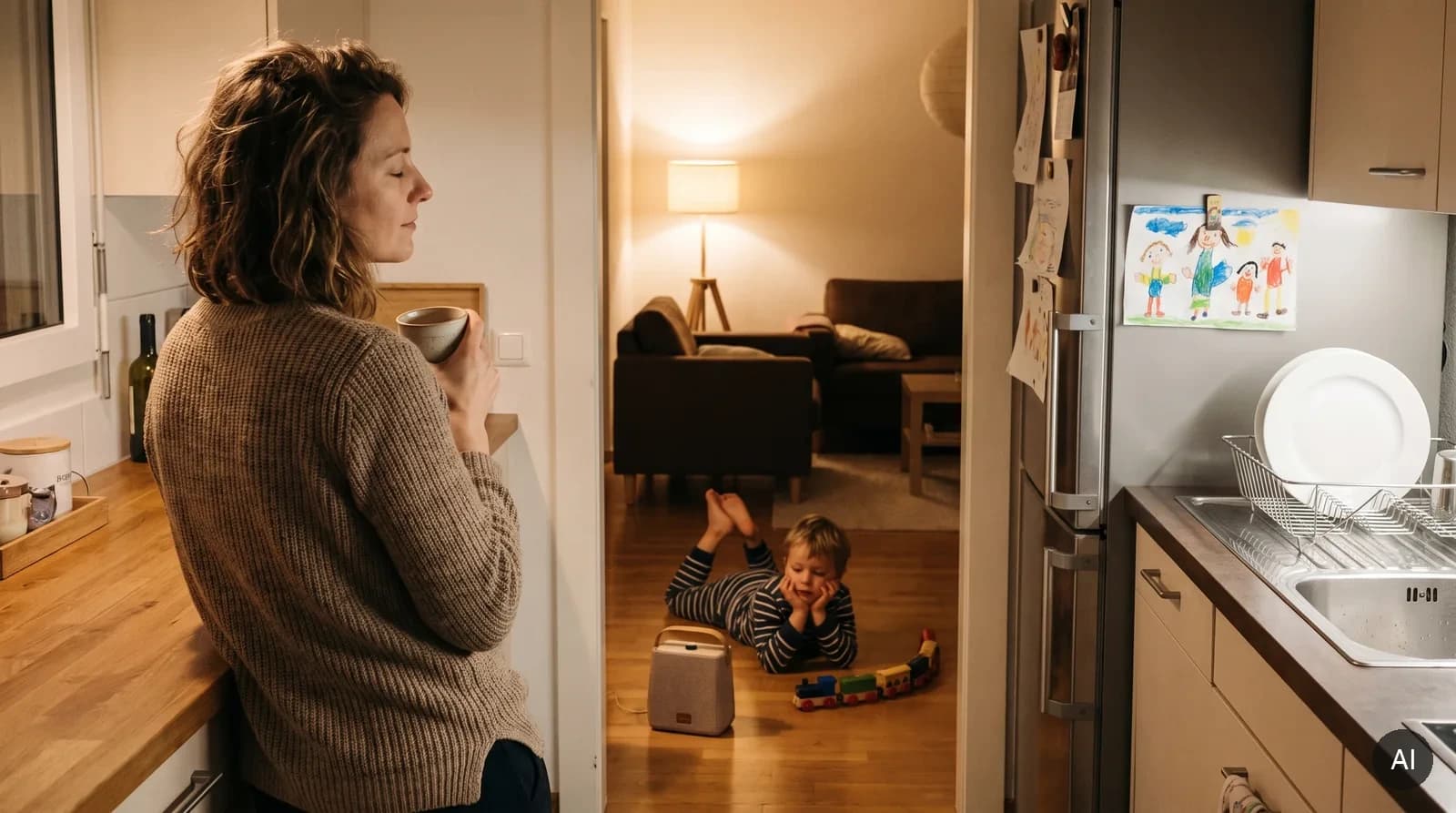
3 Sept 2026·6 min read
The fortieth dragon
The same audio story for the fortieth time, and you cannot take it any more. Why children repeat, why it wears adults down — and what helps at the fridge.
Read more
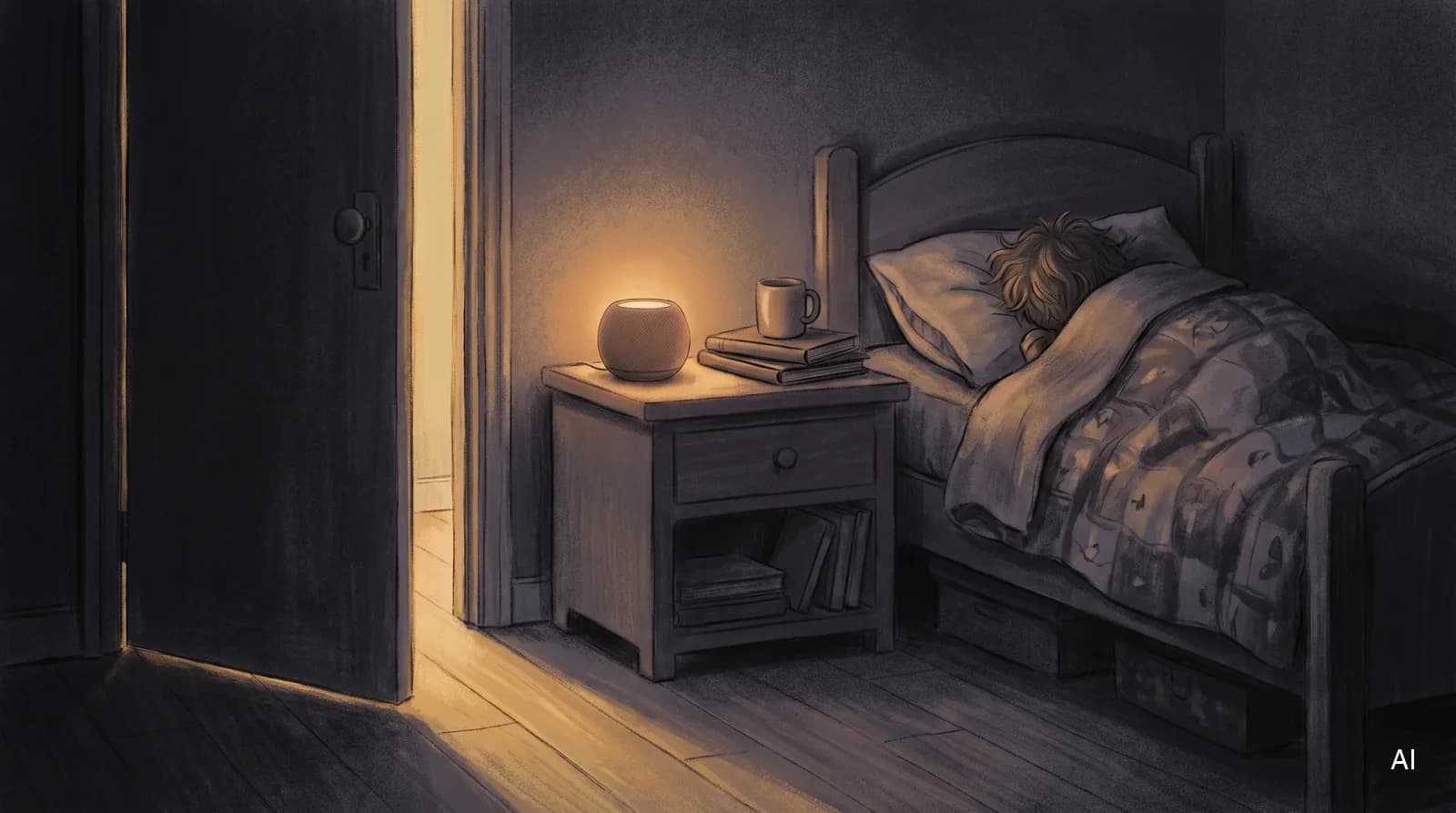
1 Sept 2026·7 min read
The Finger Above the Button
Sleep aid or stimulant? What sleep research actually shows — and how to tell an evening-suitable story from a daytime one.
Read more